
German engineering group Dürr CTS has become the first manufacturer to offer all its regenerative thermal oxidation (RTO) system designs in an electrically heated version, opening up electric exhaust air purification to industrial-scale applications for the first time.
The development has implications for aerosol manufacturers, whose filling and production processes generate solvent-laden exhaust air laden with volatile organic compounds (VOCs) – precisely the conditions RTO systems are designed to handle. Until now, electric RTO technology has been limited to low volumetric flows, restricting its use in high-throughput industrial environments. The new Oxi.X electric range covers flows of up to 120,000 Nm³/h and is capable of handling high pollutant concentrations and corrosive exhaust gases.
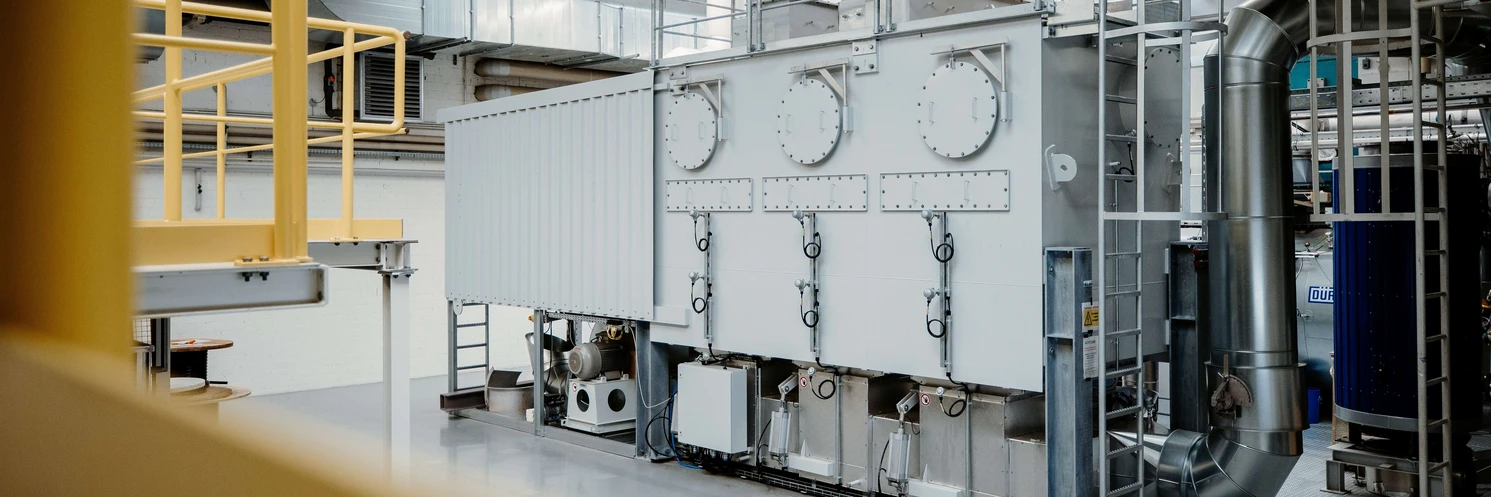
The system retains the multi-chamber architecture of Dürr's established RTO designs, replacing gas-powered burners with electric heating elements. The oxidation process itself is unchanged: VOCs, hazardous air pollutants (HAPs) and odours are destroyed in accordance with regulatory requirements. The key operational difference is the elimination of open flames and, where renewable electricity is used, the removal of CO₂ emissions from the purification process itself. Thermal NOₓ is also eliminated.
For aerosol producers contending with tightening VOC regulations and decarbonisation targets, the ability to run exhaust air treatment on renewable electricity rather than natural gas represents a meaningful compliance and sustainability tool. The option to combine electric RTOs with on-site solar generation and battery storage adds a further dimension, with the potential to take advantage of dynamic electricity pricing.
A ceramic heating element option addresses the challenge of corrosive exhaust streams – relevant where halogen compounds or other aggressive media are present – where conventional metallic elements degrade rapidly. Dürr CTS says ceramic materials maintain performance reliably under such conditions over the long term.
The company is also offering retrofit solutions for existing gas-fired RTO installations, and new systems can be configured to retain the option of switching between gas and electric operation – a hedge against further rises in CO₂ pricing.
'We have installed more than 5,000 RTO systems worldwide in the past 30 years,' says Carsten Walddörfer, manager of product management at Dürr CTS. 'With the changes in the political environment since 2022 and the resulting increase in the costs of primary energy sources, we have taken the next big evolutionary step by becoming the first provider to offer all our RTO designs in an electrified version.'